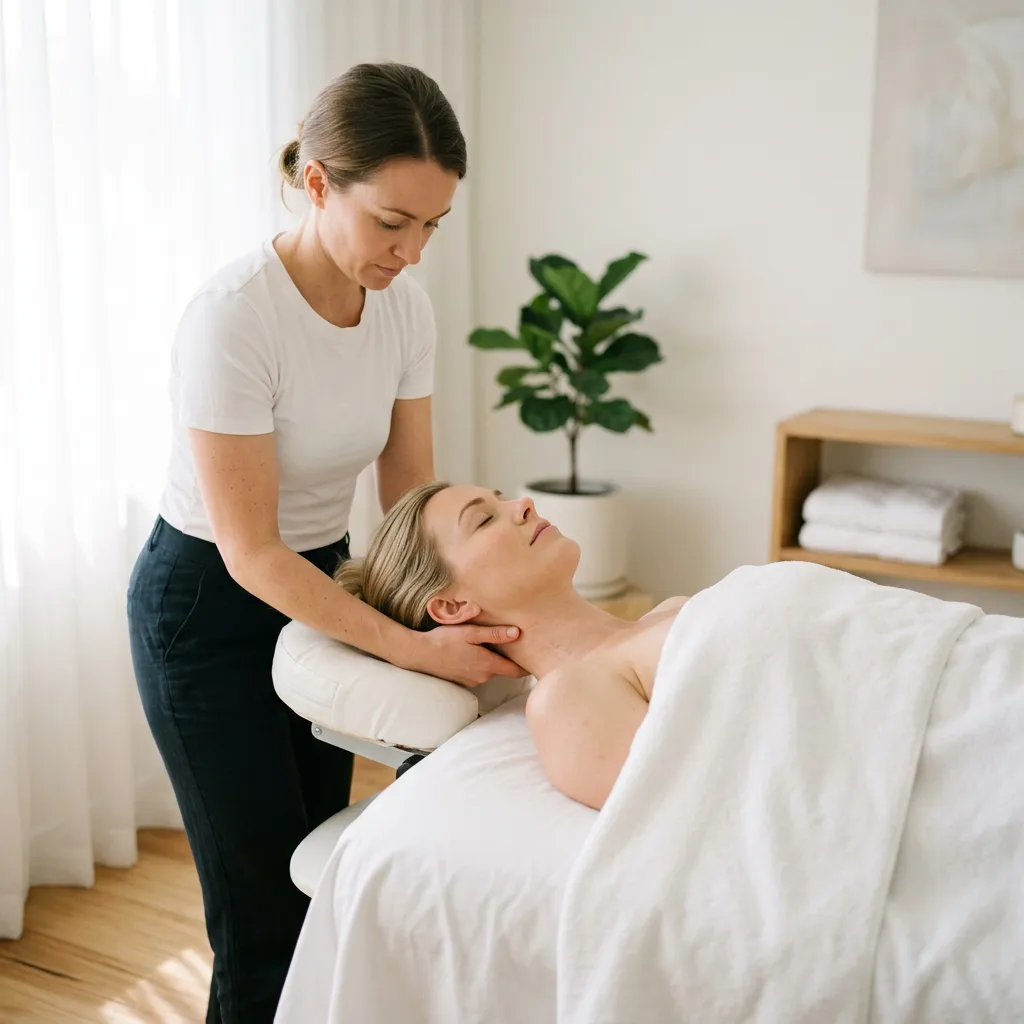
Personal Injury Protection, or PIP, is the no-fault portion of every Oregon auto policy that pays for medical care after a crash, and Oregon law sets the minimum at $15,000 of PIP medical coverage with benefits available for up to 2 years from the accident date. Massage therapy involves manipulating the soft tissues of the body, and in Oregon it is a covered PIP treatment when a qualified provider delivers it as part of your recovery. In plain terms: when you are hurt in a collision here in Yamhill County, your own insurer pays for soft-tissue treatment regardless of who caused the wreck, and most patients pay $0 out of pocket while PIP is open.
A crash can leave injuries that are not obvious on day one. Whiplash, muscle spasms, deep bruising, and chronic neck pain after a car accident often surface in the days and weeks after impact. Oregon's PIP system gives you a clear path to recovery, and car accident massage is a covered treatment at our Newberg clinic.
Oregon Massage & Spa has served Newberg since 2008 and holds a 4.8-star rating from 558+ reviews. Our experienced massage therapists work alongside your doctor or chiropractor, bill your PIP claim directly, and treat injury patients seven days a week — Monday through Saturday 9am to 8:30pm and Sunday 9am to 7pm. Here is what to know about using massage therapy after a car accident in Oregon.
Understanding Oregon PIP Insurance Coverage
Oregon is a no-fault state when it comes to auto accident medical coverage. This means your own auto insurance policy's PIP benefit covers your medical expenses regardless of who caused the accident. PIP coverage includes doctor visits, chiropractic care, physical therapy, and massage therapy from qualified providers.
Oregon law requires all auto insurance policies to include PIP coverage. Your PIP benefit covers reasonable and necessary medical treatment related to your accident injuries. Massage therapy qualifies as a covered treatment when it is part of your recovery plan and provided by a qualified massage therapist.
The process is straightforward: after your accident, file a PIP claim with your insurance company, see your doctor to document your injuries, and then begin treatment with approved providers. Oregon Massage & Spa can work directly with your insurance to streamline billing so you can focus on recovery rather than paperwork.
Recovery Timeline and When to Start Massage
The first step after any car accident is to get a medical evaluation, even if you feel fine. Many soft tissue injuries, including whiplash, do not produce symptoms for 24 to 72 hours after the collision. A doctor's evaluation establishes a medical record of your injuries, which is essential for your PIP claim.
Once your doctor has assessed your injuries and cleared you for massage therapy, treatment can typically begin within the first one to two weeks. Early intervention is important; research shows that patients who begin soft tissue treatment sooner tend to have better long-term outcomes and are less likely to develop chronic pain.
Recovery timelines vary depending on the severity of your injuries. Mild whiplash may resolve within a few weeks of treatment, while more significant soft tissue damage can require several months of consistent therapy. Your massage therapist will work with your doctor to develop a treatment plan that progresses at the right pace for your body.
What to Bring to Your First Appointment
To make your first post-accident appointment as smooth as possible, please bring the following information:
- Your PIP claim number from your auto insurance company
- Insurance company name and adjuster contact information
- A referral or prescription from your doctor, chiropractor, or healthcare provider
- Any diagnostic imaging results (X-rays, MRIs) or medical notes related to your injuries
- The date and a brief description of the accident
This documentation helps our therapists understand the full picture of your injuries and allows us to create an effective treatment plan. It also ensures that your insurance claim is properly supported from day one.
Common Crash Injuries We See in Newberg
Most of the auto accident patients who come to our Newberg clinic share a handful of injuries. Knowing which one you have helps you and your therapist set realistic goals for each visit.
- Whiplash and neck strain. The most common rear-end injury, with stiffness and headaches that often peak 24 to 72 hours after the collision rather than at the scene.
- Upper-back and shoulder tension. Seat belts and the bracing reflex load the trapezius and rhomboids, leaving knots that respond well to targeted soft-tissue work.
- Low-back strain. The lumbar muscles absorb a lot of force in any collision; this is one of the better-studied uses of massage for short-term pain relief.
- Headaches. Tension-type headaches frequently follow neck injury as tight muscles refer pain up into the head.
A few injuries are red flags for massage, including suspected fractures, herniated discs with worsening nerve symptoms, or any head injury. We screen for these at intake and will hold off and send you back to your doctor when something needs medical clearance first. Massage is a complement to your medical care, not a substitute for it.
How to Open a PIP Claim and Start Treatment
The order of these steps matters. Getting them right keeps your benefits open and your billing clean, so treatment never lands on your credit card.
- Report the accident to your auto insurer right away. Oregon PIP is no-fault, so you file with your own carrier even if the other driver was at fault. Ask for your PIP claim number and your adjuster's contact information.
- See a doctor or chiropractor within 14 days. A medical exam documents your injuries and creates the record your claim needs. Many soft-tissue injuries are not visible on X-rays, so the written exam notes carry the weight.
- Get a referral or treatment plan for massage. A referral is not always legally required, but it strengthens your claim and ties each session to a documented injury.
- Book your first session and bring your claim details. We verify your PIP benefits, confirm coverage, and bill the insurer directly so you can focus on healing.
- Keep your appointments consistent. Gaps in care can give an adjuster a reason to question whether treatment is still necessary. Steady attendance protects both your recovery and your coverage.
If you are not sure whether your policy has PIP or how much is left, call us and we will help you read the benefits. Most claims we handle have ample room for a full course of soft-tissue treatment within the standard $15,000 minimum, though how far that goes depends on the per-session rate and your treatment plan.
What Soft-Tissue Treatment Looks Like
The whiplash from a rear-end collision is a classic soft-tissue injury: the head whips forward and back, straining the muscles, tendons, and ligaments of the neck and upper back. Those tissues guard and tighten to protect the area, which is why range of motion shrinks and headaches creep in during the first week. Massage works directly on that guarding — releasing trigger points, easing muscle spasm, and restoring blood flow to tissue that has stiffened.
Early sessions stay gentle. We are not chasing deep pressure on an acutely injured neck; we are calming the nervous system and reducing protective spasm. As tissue settles over the following weeks, treatment can progress to firmer deep tissue and myofascial work, targeted stretching, and longer holds on the muscles that took the brunt of the impact. Your therapist adjusts intensity at every visit based on how you respond.
National health authorities treat massage as a complementary part of a care plan rather than a stand-alone cure. The National Center for Complementary and Integrative Health notes in its clinical digest on massage therapy that a 2014 randomized trial of 228 people with chronic neck pain found 60-minute massages given multiple times per week were more effective than fewer or shorter sessions — which is exactly why we favor consistent hour-long visits after a crash. Massage complements, and does not replace, the care your doctor provides.
What the Evidence Says About Massage and Pain
Honest expectations help recovery. Research on massage for pain is encouraging but measured: studies generally point to short-term relief rather than a permanent fix, which is why a course of care over several weeks works better than a single visit.
Low-back strain is one of the most common crash injuries, and the evidence here is concrete. According to the NCCIH summary on low-back pain and complementary approaches, a 2015 review of 25 studies with about 3,000 participants found that massage may produce short-term improvements in low-back pain, and the American College of Physicians lists massage as an option for acute and subacute low-back pain. The same source is candid that the quality of the evidence is low to very low — so we frame massage as one supportive piece of your recovery, alongside the physical therapy or chiropractic care your provider may recommend.
That measured stance is the right one for accident care. Massage may reduce pain, ease muscle spasm, and improve range of motion in the weeks after a collision, and many of our patients move and sleep better as a result. When pain points to nerve involvement — shooting pain down a leg, for example — targeted work for sciatica-type symptoms is coordinated with your medical team so massage supports, never substitutes for, a proper diagnosis.
Session Lengths and Pricing
When PIP is covering your care, your sessions are billed to the claim and most patients pay nothing at the visit. The rates below are our standard self-pay prices — useful to know if your PIP benefits run out and you want to continue treatment, or if you are paying out of pocket while a claim is being set up.
| Session | Length | Self-Pay Rate |
|---|---|---|
| Focused recovery / first acute visits | 60 minutes | $85 |
| Full-body therapeutic session | 90 minutes | $125 |
| PIP-covered auto accident massage | 60–90 minutes | $0 out of pocket while PIP is open |
Because injury recovery tends to need repeated sessions, the 60-minute visit is the workhorse for accident care. If you later transition off PIP, we can discuss billing massage through your health insurance where your plan allows it.
Aftercare Between Sessions
What you do between appointments shapes how fast you heal. After a session, drink water, move gently, and avoid sitting frozen at a desk for hours — light, frequent movement keeps newly relaxed tissue from tightening back up. Mild soreness for a day after deeper work is normal; sharp or worsening pain is not, and you should tell both us and your doctor if it appears.
Heat helps tense neck and shoulder muscles relax between visits, while gentle range-of-motion stretches keep your neck from stiffening. Keep up the home exercises your physical therapist or chiropractor assigns; massage and those exercises reinforce each other. And keep your appointments on schedule — recovery from a crash is a process measured in weeks, not a single fix.
Why Choose Oregon Massage & Spa for Accident Recovery
Our therapists have extensive experience with auto accident recovery and understand the specific techniques required for injury rehabilitation. We use a combination of deep tissue work, myofascial release, and therapeutic stretching tailored to your injuries and stage of recovery. Patients with persistent symptoms after the acute phase often transition to medical massage billed to their health plan once PIP runs out.
If you have been in a car accident, do not wait to start your recovery. Call Oregon Massage & Spa at (503) 538-0100 to schedule your first appointment, or learn more about our auto accident massage service . We are here to help you heal.