
Massage Add-On
Cupping Therapy in Newberg
Suction cups added to a 60 or 90 minute massage for +$30. No flame, no needles, nothing pierced.
By Oregon Massage & Spa NewbergPublished Last updated
What Cupping Therapy Is
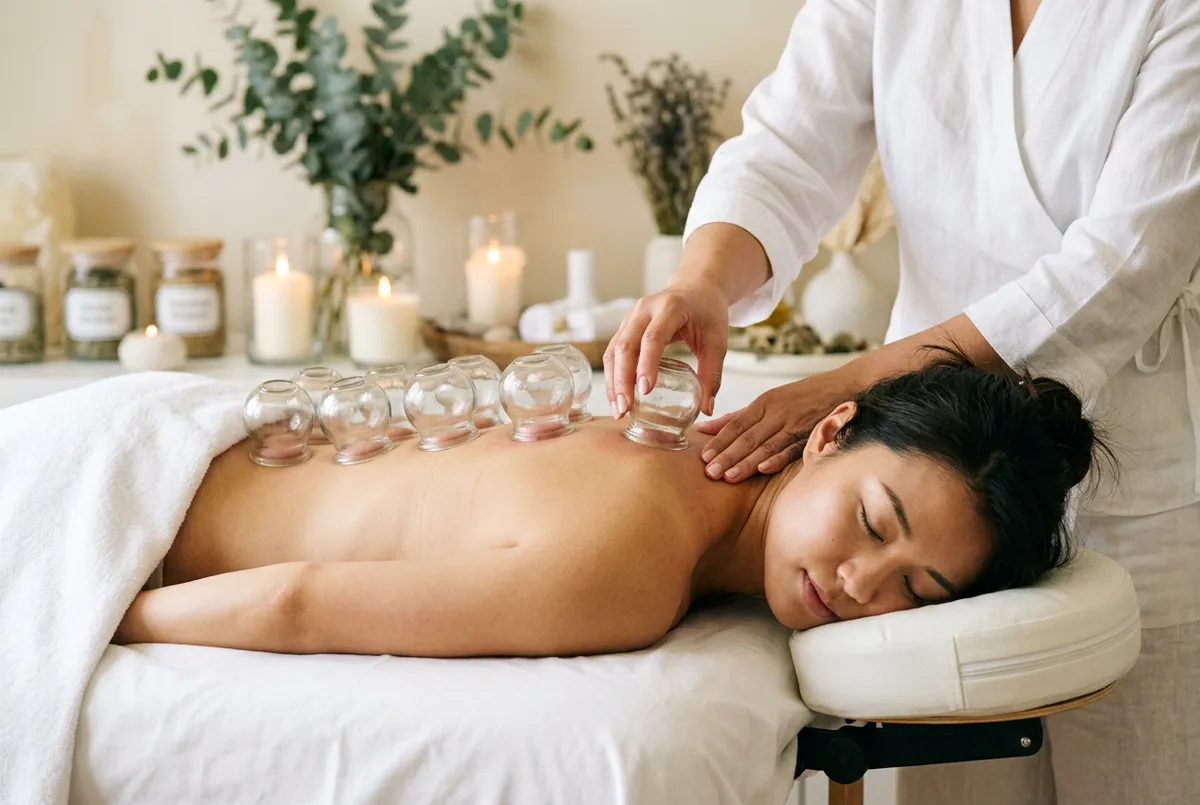
Cupping therapy is a practice in which a cup is placed on your skin and the air inside it is drawn out, so the skin and the tissue just beneath it lift up into the cup. A massage stroke presses down. Cupping pulls up. That is the whole difference, and it is why the two feel nothing alike. We use it as a +$30 add-on to a 60 or 90 minute massage at our Newberg studio.
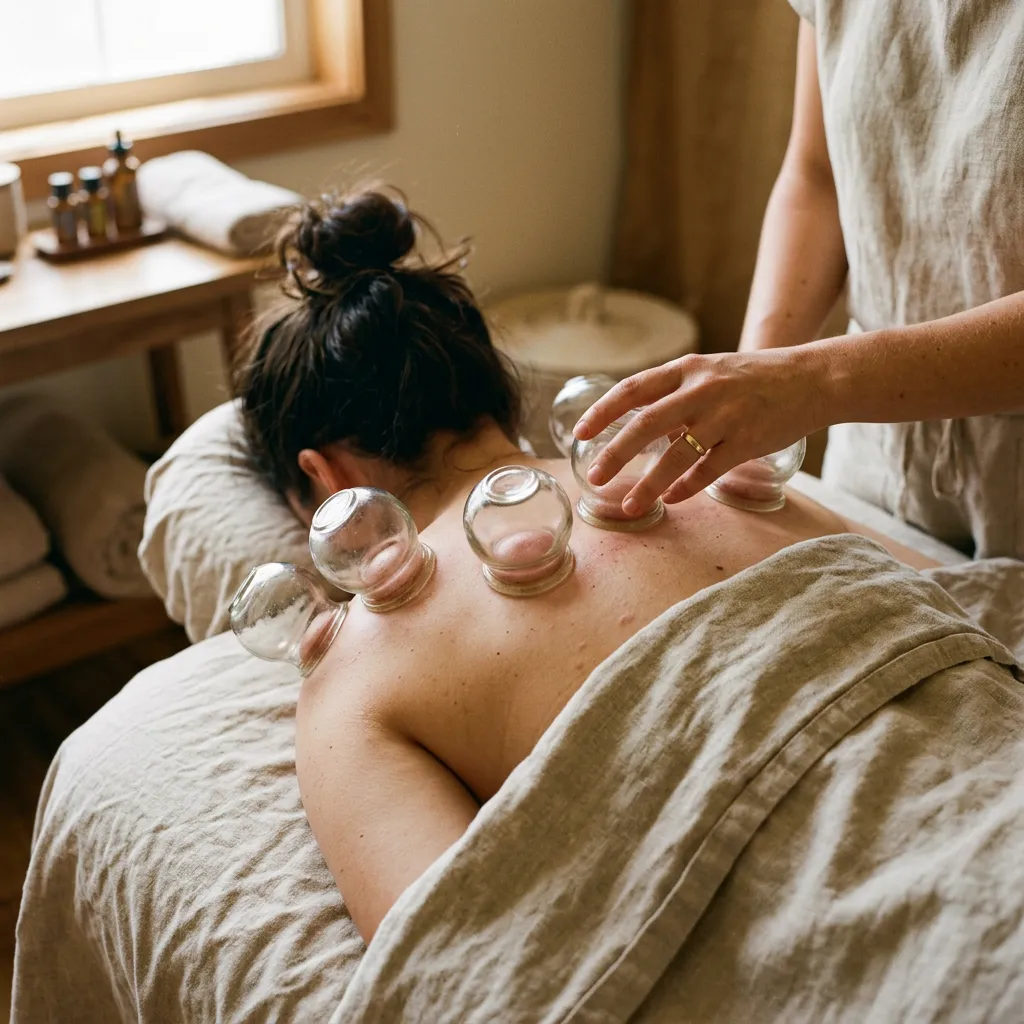
There are two ways to create that suction. The old method warms the cup with a flame first. The modern method uses a pump or a squeezable cup and no fire at all. We use the second one. The cups sit on your back or shoulders for a few minutes each, or your therapist slides them along oiled skin while the suction holds.
Cupping is popular, and it is also one of the least-studied things on our menu. We would rather tell you that up front than sell it as something it is not. The section below is what the federal research agency actually publishes about it.
What the Evidence Actually Says
The National Center for Complementary and Integrative Health (NCCIH) is the federal agency that studies practices like this one. Its cupping fact sheet lists no conditions that cupping treats and cites no trial showing that it works. Almost the whole page is about safety instead. When an agency built to evaluate this kind of practice makes no benefit claim at all, that silence is worth reading carefully.
That does not mean cupping has been proven useless. It means the good-quality research needed to say either way has not been done. Compare it to acupuncture, which sits in the same tradition and has been studied far more heavily. There, NCCIH can point to specific findings: some trials show real and sham acupuncture working equally well, while others suggest a real effect on chronic low-back pain, neck pain and knee osteoarthritis. Cupping has nothing of that weight behind it.
So why do we offer it?
Because clients ask for it, and because a lot of them come back for it. Lying still while someone works on your back is comfortable, and the suction gives a distinct sensation that many people say leaves the area feeling looser. That is a real experience. It is just not the same claim as a proven treatment, and we are not going to blur the two.
If you want the option with the strongest evidence behind it, book deep tissue massage or Swedish massage instead, and add cupping only if you are curious. Our full cupping therapy guide goes deeper into the research if you want the long version.
The Marks, and What They Really Are
The circles are the reason most people recognize cupping at all. Here is what causes them. Suction inside the cup ruptures small blood vessels near the surface, and blood spreads into the tissue around them. You end up with a flat round patch that traces the rim of the cup, somewhere between pink and deep purple depending on the person and the pressure.
They are not toxins. They are not a reading of how much tension you were carrying. They are bruises made by negative pressure instead of a knock, and they clear the same way a bruise does, over roughly three days to two weeks.
One practical note that is easy to forget. Tell any clinician who sees the marks where they came from. A row of symmetrical circles on someone's back, with no explanation, gives a doctor or nurse good reason to ask difficult questions. One sentence up front saves everyone the detour.
Who Should Skip Cupping
The risks NCCIH documents are specific rather than vague, and they are the reason we say no to cupping more often than to any other add-on. Read this list before you book it.
- You bruise or bleed easily, or take a blood thinner. Cupping works by breaking small vessels on purpose. That is a bad combination.
- You have eczema or psoriasis. Cupping can make both conditions worse.
- The skin is broken, sunburned or freshly injured. Cups go on intact skin only.
- You want it on your scalp. Bleeding inside the skull has been reported after scalp cupping. We do not do it.
- You are pregnant. Ask your own clinician first. Our prenatal massage is the better booking.
Equipment matters too. Cups can pick up blood even in dry cupping, because suction alone breaks enough surface vessels to leave traces on the rim. Reusing cups between people without sterilizing them can pass on hepatitis B and C. Ask about it anywhere you book, including here.
How a Cupping Add-On Runs in Newberg
Cupping is not booked on its own. It goes on top of a massage, so the therapist has already warmed and read the tissue before any cup goes down. Here is the order of a typical session.
- 1. Say so at intake. Tell your therapist you want cupping and mention any skin condition, medication or bruising tendency. This is when we decide whether it is a good idea at all.
- 2. Hands first. The first stretch of the session is ordinary massage. Cupping on cold, guarded muscle is unpleasant and pointless.
- 3. Cups go on. Usually across the upper back, shoulders or low back. Each cup sits for a few minutes, or slides along oiled skin while the suction holds.
- 4. Speak up. A strong pull is normal. Sharp or burning is not. Either one can be fixed in about two seconds by releasing the cup.
- 5. Hands again, then done. We finish with massage over the same area. Expect marks by the time you get to the car.
Cupping Therapy in Newberg by the Numbers
Cupping is priced as an add-on rather than a standalone booking, so what you pay is the massage plus +$30. The table below covers that math, how long the marks last, and the studio facts most people check before a first appointment.
| Established | 2008 — over 17 years of experience in Newberg, Oregon |
|---|---|
| Client rating | 4.8 out of 5 stars from 558+ reviews |
| Session lengths | 30, 45, 60, 75, 90 and 120 minutes |
| Rates from | $60 for 30 minutes · $85 for 60 minutes · $125 for 90 minutes |
| Open | Monday–Saturday 9:00 AM – 8:30 PM · Sunday 9:00 AM – 7:00 PM |
| Address | 901 Brutscher St 208 (second floor), Newberg, OR 97132 |
| Phone | (503) 538-0100 |
| Add-ons | Hot Stone +$20 · Aromatherapy complimentary · Cupping +$30 |
| Insurance | Oregon personal injury protection (PIP), workers' comp, health savings account (HSA) and flexible spending account (FSA) cards · medical massage $15–$36 copay |
| Areas served | Newberg, Oregon (OR), plus six nearby cities: Dundee and McMinnville in wine country, Sherwood and Wilsonville a short drive away, and Tigard and Tualatin toward Portland |
| Cupping add-on | +$30 on top of any massage session |
| Typical total | 60 minute massage $85 plus cupping = $115 · 90 minute $125 plus cupping = $155 |
| Method | Dry cupping only — no flame, nothing pierced |
| Marks last | About 3 days to 2 weeks, fading like a bruise |
| Cup time | A few minutes per placement, inside a 60 or 90 minute massage |
| Evidence level | Low — NCCIH lists no treated conditions and cites no trials |
Session lengths and rates
The full rate ladder, in the same order the booking page lists it. Every service is priced per session with no membership or contract.
| Service | Session lengths | Rates |
|---|---|---|
| Swedish / Relaxation Massage | 30 min / 45 min / 60 min / 75 min / 90 min / 120 min | $60 / $70 / $85 / $100 / $125 / $180 |
| Deep Tissue Massage | 30 min / 45 min / 60 min / 75 min / 90 min / 120 min | $60 / $70 / $85 / $100 / $125 / $180 |
| Couples Massage | 60 min / 75 min / 90 min / 120 min | $170 / $200 / $250 / $360 |
| Prenatal Massage | 60 min / 75 min / 90 min | $110 / $135 / $160 |
| Reflexology Foot & Body Combo | 75 min / 100 min | $110 / $145 |
| CBD Massage | 60 min / 90 min | $100 / $130 |
| Medical Massage | 60 / 90 min with referral | $15–$36 copay |
| Auto Accident (PIP) Massage | 30 / 60 / 90 min | $0 self-pay |
Sources and Further Reading
Everything this page says about cupping's evidence and risks comes from the federal agency that studies it, not from us. We have linked the original so you can read it yourself. Cupping is a comfort practice with low-quality evidence behind it, and it should not replace or delay care for a real medical problem.
- 1. NCCIH — Cupping — the fact sheet this page draws on, including the side effects, the dry-versus-wet distinction and the note about explaining the marks to your clinicians.
- 2. NCCIH — Traditional Chinese Medicine: What You Need To Know — the wider context for how practices in this tradition have and have not held up under testing.
- 3. NCCIH — Massage Therapy: What You Need To Know — the evidence picture for the massage the cupping is added to, which is considerably stronger.
Cupping Therapy FAQ
Does cupping therapy hurt?
Why does cupping leave round marks?
How long do the cupping marks last?
Do you do wet cupping or fire cupping?
Who should not get cupping?
How much does cupping therapy cost in Newberg?
Add Cupping To
Areas We Serve
Begin Your Journey
Ready to Feel Your Best?
Book your massage at Oregon Massage & Spa Newberg today. We are open seven days a week, Monday through Sunday. Walk-ins are welcome, but an appointment secures your preferred time.